
Find Who Owns Meade County Property
The free basic Meade County PVA search returns ownership and assessed value. For confirmation, go to the County Clerk. That office records deeds, mortgages, easements, plats, and related instruments. Carry the PVA map number across. Use the exact owner spelling too. These bridge fields link the two offices.
- Normalize the street address and search the Meade County PVA for its map number.
- Copy the owner display, acreage, class, assessed value, and access date.
- Search that name as grantee in eCCLIX and match the newest deed by legal description.
- For an entity, compare the recorded name with active and inactive Kentucky SOS filings.
From a Meade County Address to an Owner Name
An address is only a locator. USPS city and ZIP prove nothing about ownership or city limits. The comprehensive plan lists communities that may be neither incorporated places nor recorded subdivisions. Keep mailing city, incorporated city, community, and tax district separate.
When an address will not resolve, search by owner name. Or ask the PVA to match a legal description. eCCLIX offers no direct tax-lot searching. The practical route runs from PVA map number to current owner name. Then that name leads into the deed index.
Where Meade County Owner Information Comes From
Three sources can name an owner. They are not interchangeable. The assessment roll is convenient. It reflects a tax-year snapshot. A deed records a transfer. The planning map adds location context, though it may not show owner cards.
| Source | Owner Info It Gives | Access |
|---|---|---|
| Meade County PVA | Basic ownership and assessed value | Free basic search; display may lag a transfer |
| County Clerk and eCCLIX | Recorded grantee, date, deed, and prior reference | Account-gated online access and office records |
| Kentucky Secretary of State | Entity status, filings, and registered agent | Free entity search; not ownership proof |
| Planning and Zoning map | Mapped land-use context | Public map; parcel owner fields unconfirmed |
The owner of record is not always the occupant. A tax mailing address may sit elsewhere, a trust or LLC may hold title, and a freshly recorded deed may not yet show in the assessment display.
A Recent Meade County Deed May Beat the Roll
The PVA assesses property for a tax year. It also reviews each parcel at least once every four years. A deed recorded after the tax-year state can make the roll look stale. Both offices may still report accurately.
Write down the PVA access date and the deed recording date. If they conflict, report each source separately. The newest matching recorded deed is the stronger evidence of a transfer.
January 1 anchors the tax-year display. A buyer who takes title later in the year may meet a bill or assessment view tied to the earlier owner. That timing does not undo the deed. It simply means the recording clock and the assessment clock run separately. Both catch up eventually.
Entity and Estate Owners Need Separate Meade Searches
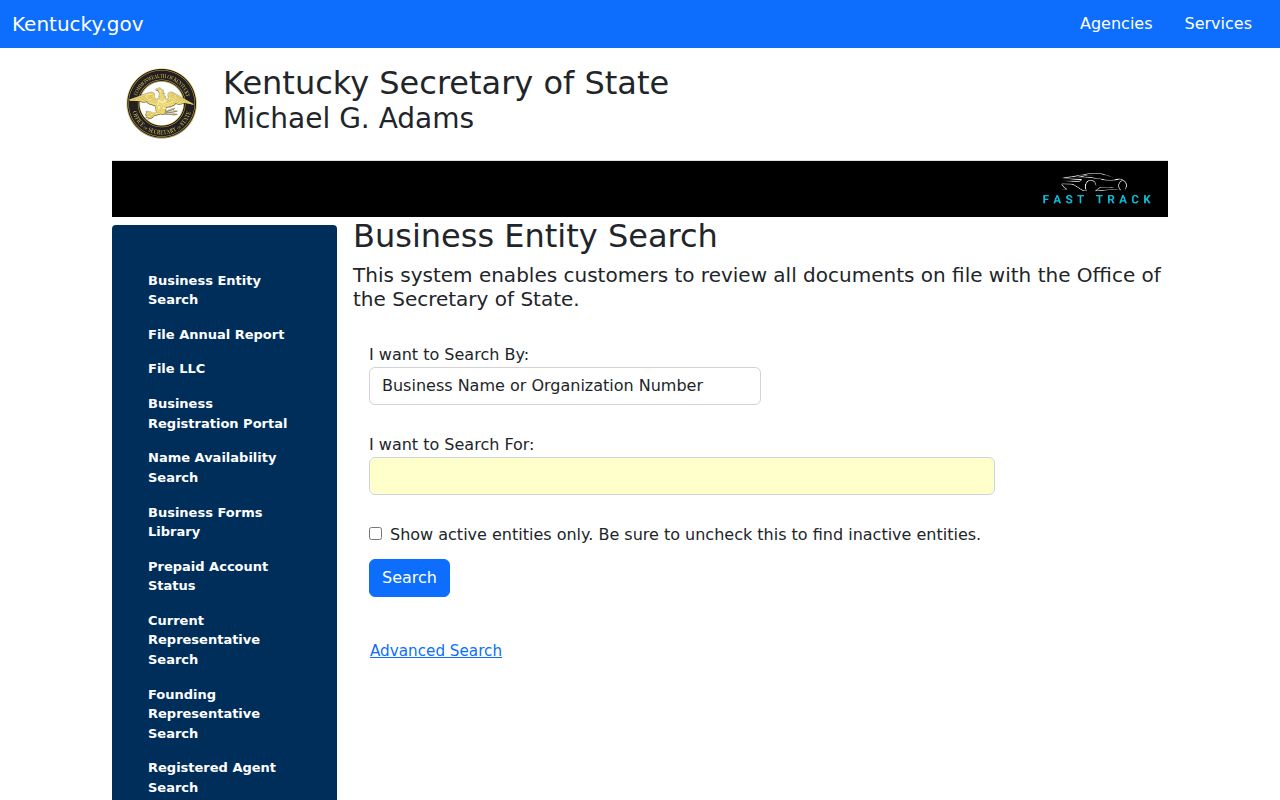
With an LLC, search punctuation variants and both active and inactive SOS records. Then compare the deed grantee and signatory. SOS data can clarify entity continuity or a registered agent. It does not prove ownership of every address in a filing. The official Kentucky business entity search lays out the entity route.
A trust or estate may call for a will, settlement, probate file, commissioner deed, or later conveyance. Search both grantor and grantee roles. KDLA guidance notes index conventions such as H for heirs, C for commissioner, and S for sheriff.
Legal Descriptions Separate Same-Name Property Owners
Names repeat. They also arrive with initials, spouses, and old spellings. Match acreage, subdivision and lot, metes-and-bounds calls, adjoining owners, and prior book/page references. Those controls beat a mailing address alone.
- Owner of record
- The party named by the assessment or recording source.
- Grantee
- The party receiving the interest stated in a deed.
- Situs address
- The property's street location, distinct from owner mail.
- Title
- The legal ownership interest, which a simple index search does not conclusively establish.
For a platted lot, copy the subdivision name, lot, block, and plat reference exactly. Rural acreage is different. Compare road and stream calls, adjoining tracts, exceptions, and access easements. If the tract was split or combined, find the deed or plat that made the change before assigning an owner name to today's parcel shape.
Meade Doc Alert Watches a Filed Name
The County Clerk offers Meade Doc Alert, a free notice service for a deed or mortgage filed under a person or business name. It can flag a new indexed filing. It is not continuous parcel monitoring, and it does not replace reading the document.
Entity-name drift, initials, and spelling variants all matter here. Enroll the relevant exact names. When a notice arrives, preserve the deed reference.
Then compare the alert's party name against the deed image, the legal description, and the PVA map number. A similar name may belong to other land or another person entirely. Treat the alert as a prompt to inspect a filing, not as a finding about who owns the property in question.
Limits of Meade Property Owner Searches
An owner lookup proves no occupancy, clear title, lien priority, or complete indexing of every interest. Voter, business, postal, and license addresses are leads only. Safe at Home creates protected-address handling rules. A missing address must never be used to infer participation or identity.
Ownership is not a title opinion. Use Meade County owner information for lawful property diligence. Never use public records to stalk, harass, target, or re-identify anyone.
For the present record, see the current Meade County owner guide. The previous-owner chain follows each deed backward, so preserve the date and source of every conclusion.