
Trace Former Meade County Property Owners
Former owners of Meade County land leave traces across several record groups. Online coverage is a recent layer. It is not the whole story. The Clerk reports courthouse documents from 1795 forward and most indexes from 1798. KDLA's deed microfilm for Meade County begins even later, in 1824. Each starting point matters when the chain runs deep.
| Transfer Date | Grantor to Grantee | Deed Type | Book/Page |
|---|---|---|---|
| Newest recording | Prior owner to current grantee | As indexed | Copy exact reference |
| Earlier recording | Earlier owner to later grantor | As indexed | Follow prior pointer |
| Pre-online step | Book-index parties | Deed, commissioner, sheriff, or other | Clerk book or KDLA film |
A solid backward timeline anchors every former owner to a dated deed and an exact parcel locator. Only then should the search push into older sources. That discipline keeps the chain honest.
| Source | Years It Covers | Where Held | What It Shows |
|---|---|---|---|
| eCCLIX index | Real-estate index since 1993; indexed and imaged since August 1995 | Online account | Parties, references, and available images |
| Clerk legal records | Most records 1795 to present; most indexes from 1798 | County Clerk | Recorded deeds and related instruments |
| KDLA deed microfilm | 1824 to 2009 | KDLA or film access | Older deeds and book/page chain |
| KDLA tax books | Selected years from 1824 through 2003 | KDLA | District and landowner clues when a deed link is missing |
| KDLA plat microfilm | 1970 to 2009 | KDLA and Clerk | Subdivision, lot, and road context |
Begin with the newest deed, whatever its age. The prior book and page reference it carries is usually sharper than a broad surname search. Move to office books or microfilm only once the pointer or the online images run out.
Walking the Meade County Deed Chain Backward
Since 1890, Kentucky deeds commonly cite the earlier recording, according to KDLA. Each citation is a backward pointer. Follow it, but confirm every step first. Check that each step describes the same tract. Do this before assuming the grantor's other land belongs in the chain. The Clerk's land-records page describes the eCCLIX coverage. That coverage supports this backward walk through Meade County deed records.
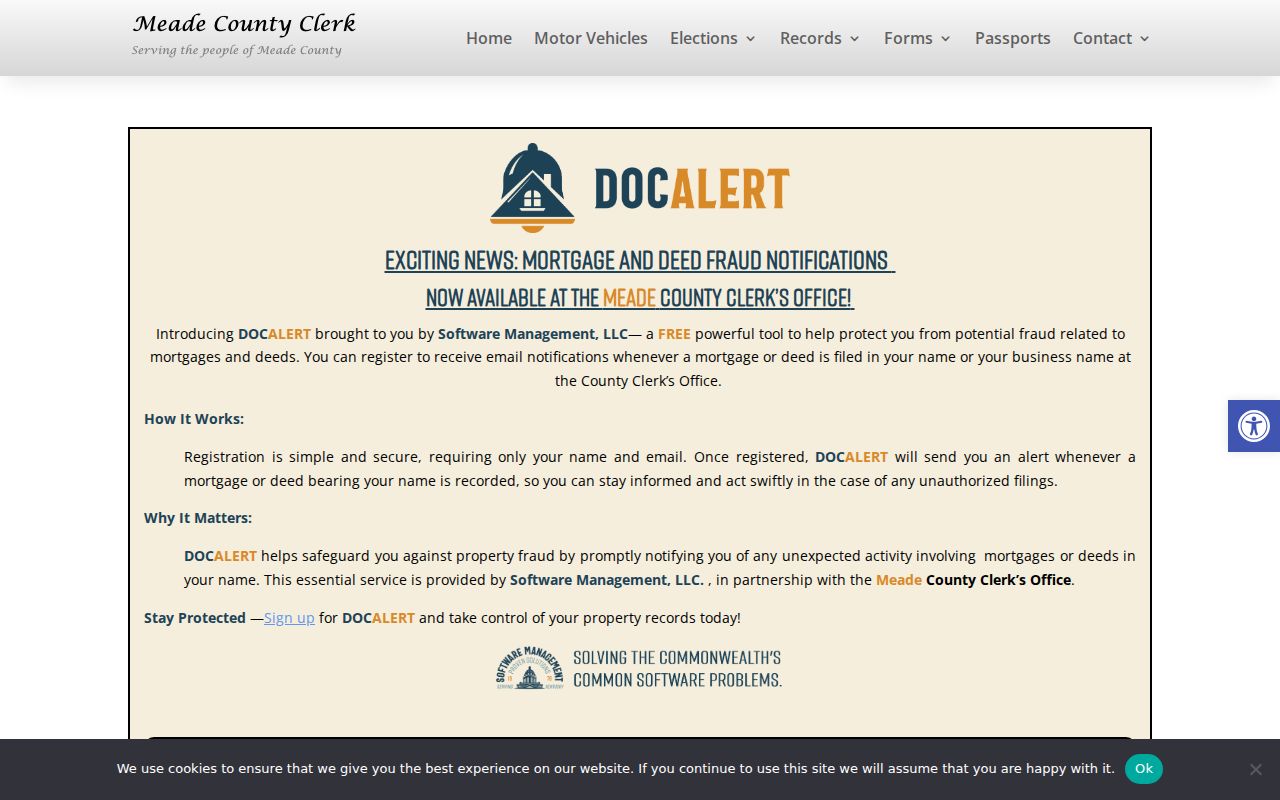
That page is a coverage guide rather than a deed result. Every former-owner link still has to be matched to one tract and read in the instrument itself before it counts.
- Find the newest matching purchase deed with the current party as grantee.
- Copy its grantor, legal description, execution date, recording date, and prior reference.
- Search that grantor as an earlier grantee and match the same tract.
- Repeat; at the online limit, use the Clerk's reverse index, deed book, or KDLA microfilm.
- Grantor and grantee
- The party conveying and the party receiving the stated interest.
- Chain of title
- The ordered sequence of instruments affecting the same land.
- Reverse index
- An index used to find when a named party conveyed property.
- Quitclaim and warranty deed
- Different deed forms whose legal effect must be read from the instrument, not guessed from the index.
Former Meade County Owners Across Three Online Milestones
The Clerk separates index-only real-estate coverage from indexed and imaged CCLIX filings. The index-only coverage starts in 1993. The CCLIX filings date to August 1995. A separate Clerk page places online images over most instrument filings from January 2004 forward. These are three different statements, not one universal cutoff. Note where each former-owner link came from. It may be an index row, an online image, or an office copy. An index hit can point to the next book or instrument. The document itself must still be read before anyone says what interest actually moved.
Older Meade County Owners in Microfilm and Books
For older owners, KDLA lists Meade County deed microfilm covering 1824 through 2009, wills through 2010, original land warrants for 1846 through 1852, and selected tax assessment books. Tax lists are usually arranged by district and landowner rather than indexed. The Library of Congress Kentucky courthouse-record guide lays out the FamilySearch and microfilm browsing route.
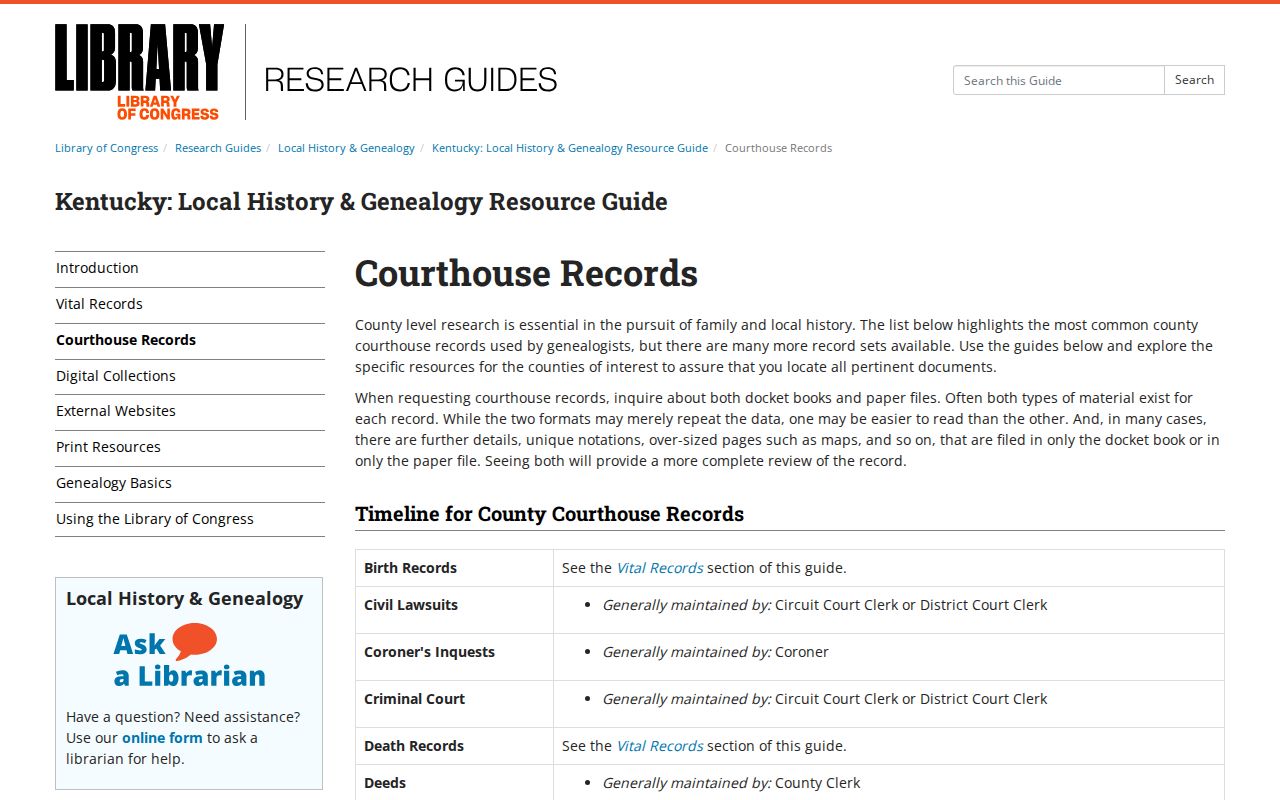
Before 1890, KDLA suggests tax records may fill a missing link. A will, settlement, court order, sheriff deed, or commissioner deed can also explain why ownership shifted without an ordinary sale.
Meade County Prior Owners Hidden Under Heirs or Officials
A prior owner may hide where the index least expects him. KDLA guidance recommends trying H for heirs, C for commissioner, and S for sheriff. Those conventions apply in some indexes but not all. Search grantor and grantee roles alike, plus alternate spellings. For an estate, line up the will or settlement, plus the probate case and the later deed. Keep one shared legal description across all of them. A court case or tax-sale notice records an event. It does not by itself prove that final title ever changed hands.
The 1974 Meade Courthouse Disaster Is a Lead
KDLA lists a Meade County courthouse disaster in 1974. The listing names no lost books or pages, though. That gap should never be stretched into a claim that the deed chain was destroyed. Ask the Clerk or KDLA for a disaster inventory. Ask also for any substitute volumes, microfilm, and a precise gap range. Then bridge the missing step with a later deed reference, tax book, will, court file, plat, or land warrant. Label that alternate evidence for what it is.
Legal Descriptions Keep Previous Owners on One Tract
Street names and postal labels change over the decades. Match acreage, subdivision and lot, and metes-and-bounds calls. Also match adjoining owners, road or river references, and each prior book and page pointer. Brandenburg's riverfront and ferry history can explain an old landing or road term. But only the deed and plat tie that context to actual land. Keep a log of every spelling, role, date range, source, and dead end. The habit makes a former-owner chain reproducible. It also stops a local-history tidbit from posing as ownership proof.
Meade County Ownership Record Depth
The online portal sets no historical limit on Meade County property records. The courthouse, KDLA microfilm, selected tax books, wills, land warrants, and court records all extend the search deeper. County-boundary changes move nothing either. KDLA notes that the original county keeps the original land record.
Coverage caution. Online indexes begin in the modern era, while older Meade County owners require books or microfilm. A deed-chain worksheet is not a title opinion.
Use previous-owner research for lawful house history and property diligence, never to stalk or harass anyone. For the current name alone, see the current-owner record check; the deed page explains how to obtain a single instrument copy.